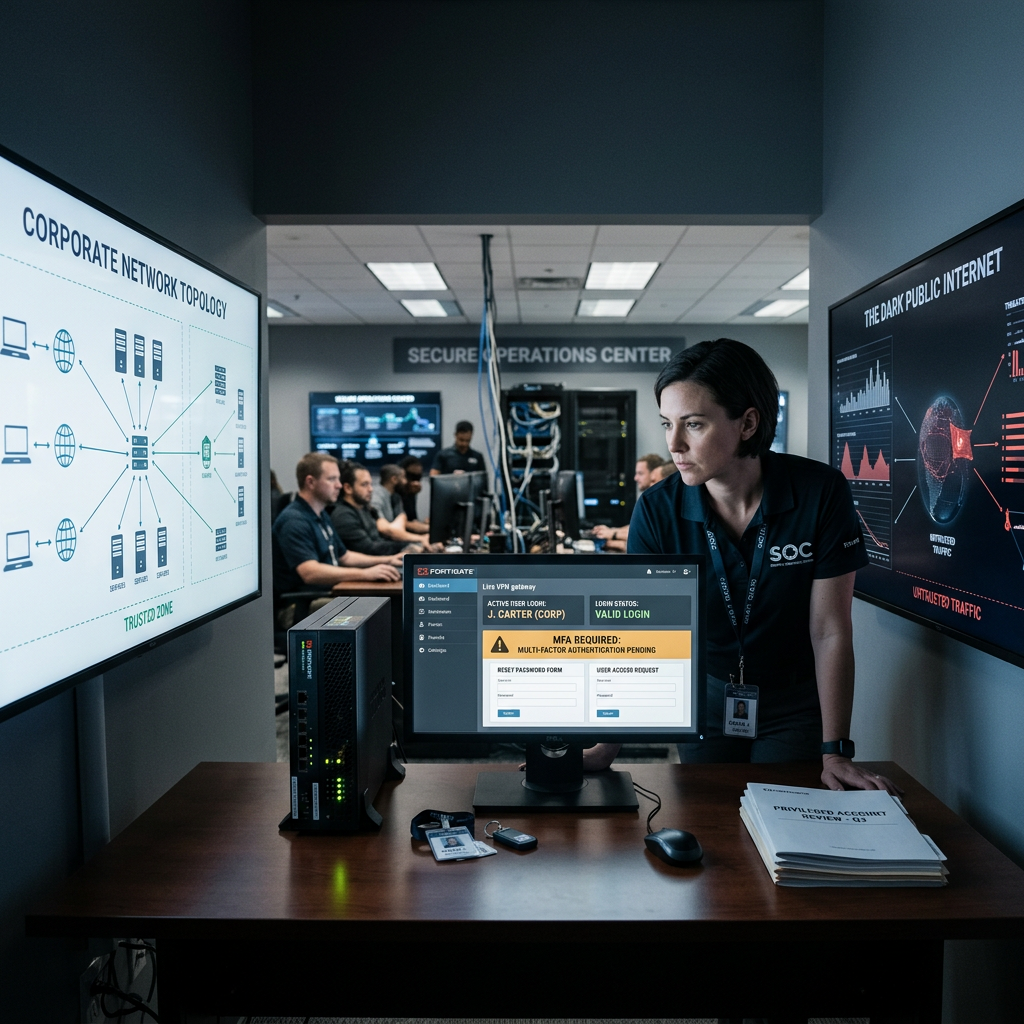
Cybersecurity leadership is under growing pressure as threat volumes rise, technology environments become more complex, and artificial intelligence changes both business operations and security work. For CISOs and security directors, the issue is no longer only technical capacity. It is a governance, resilience, staffing, and executive accountability challenge.
Recent survey findings show that 68% of cybersecurity and IT professionals believe their jobs are more difficult than they were two years ago. More than half report increased complexity and workload, while 52% say cyberthreats have become more overwhelming. These pressures are reshaping how organizations structure cybersecurity leadership, including increased use of fractional or virtual CISOs.
For decision-makers, the message is clear: cybersecurity teams need more than new tools. They need clearer authority, stronger executive alignment, better visibility into technology adoption, and realistic operating models that can keep pace with AI-driven change.
The CISO Role Is Becoming Harder to Sustain
The modern CISO is expected to manage ransomware risk, cloud security, identity exposure, third-party dependencies, regulatory obligations, incident readiness, board reporting, cyber insurance requirements, and now enterprise AI adoption. In many organizations, these responsibilities continue to expand faster than budgets, staffing, or decision rights.
Long workweeks, fragmented ownership, and limited organizational support are pushing some experienced CISOs away from full-time corporate roles. The pressure is especially acute when business units adopt new technologies without involving security early enough in planning, architecture, procurement, or risk review.
This creates a familiar pattern:
- Business teams accelerate digital initiatives.
- Security teams are asked to approve or secure them after the fact.
- Visibility is incomplete.
- Risk ownership is unclear.
- The CISO remains accountable for outcomes they did not fully control.
Executive takeaway: CISO stress is not only a workforce issue. It is often a symptom of weak cyber governance, unclear technology decision processes, and insufficient executive engagement.
AI Is Increasing Both Risk and Opportunity
Artificial intelligence is now one of the most significant forces changing cybersecurity operations. It creates two opposing pressures for security leaders.
On one side, AI adoption inside the enterprise introduces new risks. Employees and business units may use generative AI tools, AI-enabled SaaS platforms, or embedded AI features without security review. This “shadow AI” problem resembles earlier waves of shadow cloud adoption, where teams enabled services or features without notifying cybersecurity, risk, or compliance functions.
The result is reduced visibility into:
- What AI tools are being used.
- What data is being uploaded or processed.
- Which vendors or models have access to sensitive information.
- Whether retention, training, logging, or access controls are appropriate.
- Which security controls are enabled or missing.
- Who is accountable for monitoring, detection, and response.
For regulated sectors such as banking, insurance, healthcare, public sector, energy, and critical infrastructure, this lack of visibility can create data protection, audit, contractual, operational, and regulatory exposure. In technology and SaaS organizations, uncontrolled AI use may also affect software development, customer data handling, secrets management, and platform trust.
On the other side, cybersecurity teams see strong potential in AI-enabled security tools. Survey respondents indicated broad interest in using AI to reduce operational burden: 37% are already using AI solutions to address cybersecurity issues, and another 46% plan to do so.
The most common areas where teams want AI support include:
- Automated cybersecurity assessments.
- Software testing.
- Predictive risk analysis.
- Threat detection.
- Compliance and reporting workflows.
Used appropriately, AI can help security teams triage alerts, summarize incidents, accelerate control testing, improve vulnerability prioritization, and reduce manual reporting. But it must be governed carefully. AI that is poorly integrated, trained on weak data, or deployed without human oversight can create false confidence, missed signals, or compliance concerns.
Decision point: Organizations should treat AI as both a business-enablement priority and a security governance priority. Blocking AI entirely is rarely realistic, but unmanaged adoption creates unacceptable blind spots.
Liability Concerns Remain, but Operational Pressure Is the Bigger Issue
High-profile legal actions involving security executives have raised concern about personal liability among CISOs. However, recent workforce findings suggest that liability is not currently the top source of CISO stress. The larger day-to-day pressure comes from keeping up with new business technology initiatives, especially AI, while also managing expanding threat and compliance demands.
This distinction matters for boards and executive committees. Liability protections, indemnification, and directors and officers coverage are important, but they do not solve the underlying operating problem. A CISO cannot be effective if security is treated as an after-the-fact approval function rather than an embedded part of business and technology governance.
Organizations should therefore focus on structural support:
- Clear reporting lines and escalation paths.
- Board-level visibility into cyber risk.
- Defined risk acceptance processes.
- Security involvement in AI, cloud, SaaS, and supplier decisions.
- Documented accountability between business owners, IT, legal, compliance, and cybersecurity.
- Realistic prioritization aligned to business impact.
Key point: Reducing CISO burnout requires more than wellness messaging. It requires changing how cyber risk decisions are made across the enterprise.
Fractional CISOs Are Becoming More Common
The number of organizations with full-time CISOs has declined, while the use of fractional CISOs has increased. Survey data indicates that companies with full-time CISOs dropped from 76% to 63%, while fractional CISO usage rose from 6% to 15%.
This does not necessarily mean demand for cybersecurity leadership is shrinking. In many cases, the opposite is true. More small and midsize organizations now need strategic security guidance because customers, regulators, insurers, partners, and boards increasingly expect demonstrable cyber hygiene.
Fractional or virtual CISOs can help organizations that face significant cyber risk but cannot justify or fund a full-time executive security leader. This model can be especially useful for:
- Midmarket financial services, healthcare, retail, manufacturing, and professional services firms.
- SaaS and technology companies preparing for enterprise customer security reviews.
- Organizations seeking cyber insurance coverage or renewal.
- Companies building their first formal cybersecurity program.
- Businesses needing board reporting, incident readiness, or compliance alignment.
- Organizations undergoing cloud migration, M&A, or major digital transformation.
However, fractional leadership is not a shortcut around accountability. It works only when the organization provides authority, access to stakeholders, budget influence, and executive sponsorship.
What Security Leaders Should Prioritize
Cybersecurity decision-makers should respond to these pressures by strengthening the operating model, not simply adding more tasks to already overloaded teams.
1. Establish Governance for AI Adoption
Create an enterprise AI security governance process that includes cybersecurity, legal, privacy, compliance, procurement, IT, data governance, and business leaders.
At minimum, organizations should define:
- Approved AI tools and acceptable use cases.
- Restrictions on sensitive, regulated, confidential, or customer data.
- Vendor risk review requirements.
- Logging, monitoring, and access control expectations.
- Human oversight requirements for security-relevant AI outputs.
- Incident response procedures for AI-related data exposure or misuse.
2. Bring Security Into Technology Decisions Earlier
Security teams should not be limited to late-stage approvals. They need visibility during planning, vendor selection, architecture design, contract review, and deployment.
This is particularly important for cloud platforms, SaaS applications, identity systems, AI tools, remote access, data platforms, payment systems, and operational technology environments.
3. Use AI to Reduce Operational Load Carefully
Security teams should evaluate AI-enabled tools where they can reduce manual burden, especially in detection, assessment, testing, reporting, and risk analysis. But implementation should include validation, human review, governance, and metrics.
Practical evaluation criteria include:
- Accuracy and explainability.
- Integration with existing security workflows.
- Data handling and retention controls.
- Auditability.
- False positive and false negative rates.
- Role-based access controls.
- Vendor security posture.
- Impact on analyst productivity.
4. Reassess the Cybersecurity Leadership Model
Organizations should determine whether they need a full-time CISO, fractional CISO, deputy CISO, security program manager, or a combination of internal and external expertise.
The right model depends on risk exposure, regulatory obligations, operational complexity, budget, maturity, and executive expectations. A highly regulated bank, hospital network, energy provider, or critical infrastructure operator will usually require deeper internal leadership than a smaller organization building foundational capabilities.
5. Translate Cyber Risk Into Business Impact
CISOs need support in communicating risk in business terms. Executive leaders should expect security reporting to address:
- Service availability.
- Customer and patient impact.
- Financial loss scenarios.
- Regulatory exposure.
- Operational disruption.
- Insurance implications.
- Third-party risk.
- Recovery readiness.
- Reputational damage.
- Strategic technology risk, including AI.
This framing helps boards and executives make informed trade-offs rather than treating cybersecurity as an isolated technical function.
Building a More Sustainable Security Function
Cybersecurity teams are being asked to operate in an environment that is more complex, faster-moving, and less forgiving than it was only a few years ago. AI is accelerating that shift by increasing both the risk surface and the potential for operational efficiency.
For CISOs and executive leaders, the priority is not to resist change but to govern it. Organizations that embed security into business decision-making, manage AI adoption transparently, support cybersecurity leadership with clear authority, and use automation responsibly will be better positioned to reduce risk without slowing innovation.
The CISO role is not disappearing. It is evolving into a more strategic, distributed, and governance-driven function. Organizations that recognize this shift early will be better prepared to protect critical operations, satisfy regulators and insurers, maintain customer trust, and sustain cyber resilience under growing pressure.